
Personal Finance

Tips on budgeting, saving, investing, debt management, and improving personal financial health.

Person creating a paycheck budget at a desk using a notebook, calculator, laptop, cash, and savings jar to organize expenses and savings.

Paycheck Budgeting for Beginners: How to Make Your Money Last Between Paydays

Most budgets don’t fail on day 30. They fail around day 9, right after rent and the car payment both land in the same week and “monthly budget” stops meaning much of anything. That’s usually the moment people give up on budgeting altogether, when the real problem was smaller than it felt: the budget was […]

Paycheck Budgeting for Beginners: How to Make Your Money Last Between Paydays Read More »

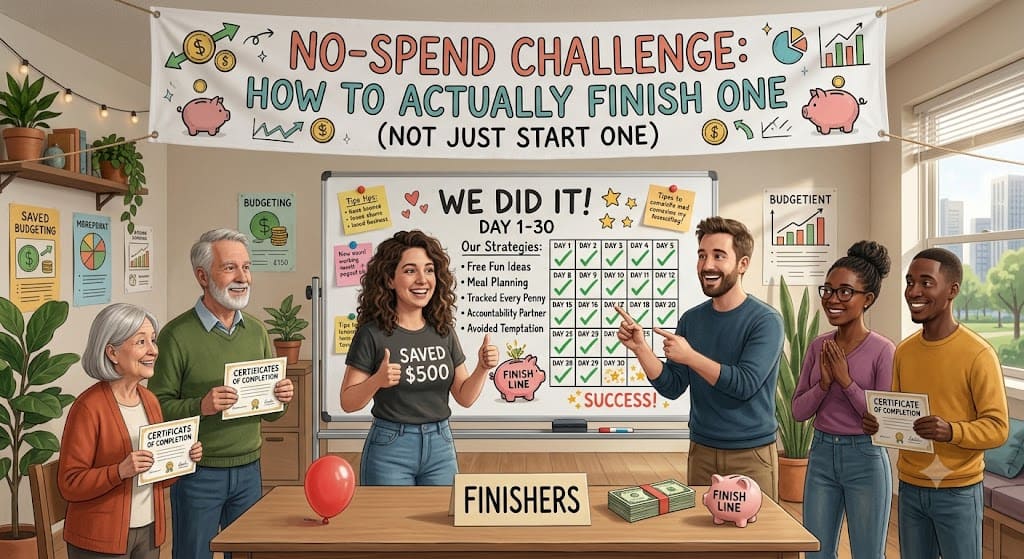
People celebrating the successful completion of a 30-day no-spend challenge with savings goals, budgeting progress, and financial milestones

No-Spend Challenge: How to Actually Finish One (Not Just Start One)

A no-spend challenge is a set period, usually a week to a month, where you pause spending on anything beyond your basic needs like housing, groceries, utilities, and transportation. Everything else, dining out, online shopping, subscriptions you forgot you had, gets put on hold so you can see exactly where your money actually goes. It

No-Spend Challenge: How to Actually Finish One (Not Just Start One) Read More »

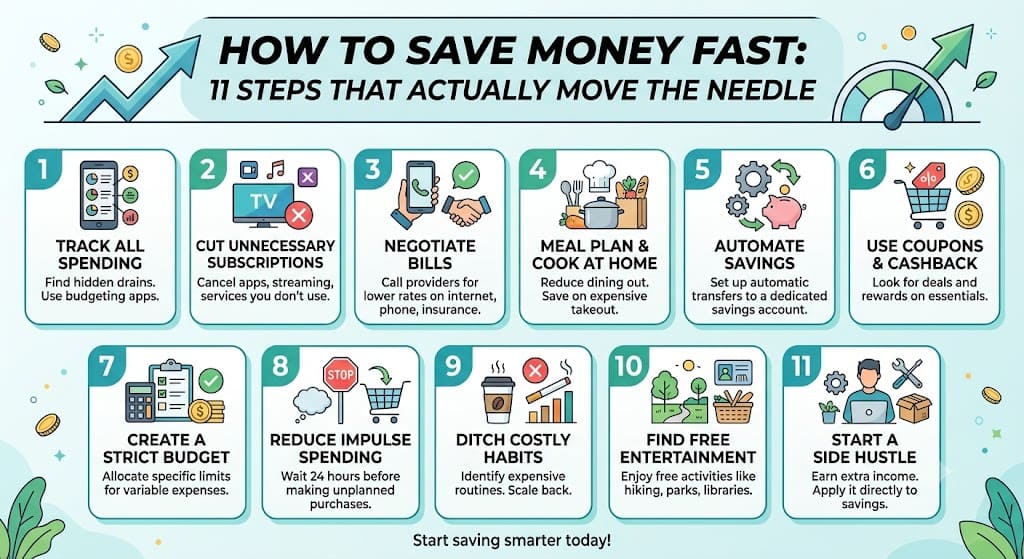
Infographic showing 11 practical ways to save money fast, including budgeting, meal planning, automating savings, reducing subscriptions, and starting a side hustle

How to Save Money Fast: 11 Steps That Actually Move the Needle

If you need cash fast, the quickest wins come from cutting recurring costs you’re not using, moving your savings into an account that actually pays interest, and giving yourself a short, aggressive challenge instead of a vague “save more” goal. Here’s the full step-by-step, plus the numbers that make it worth doing right now. “It

How to Save Money Fast: 11 Steps That Actually Move the Needle Read More »

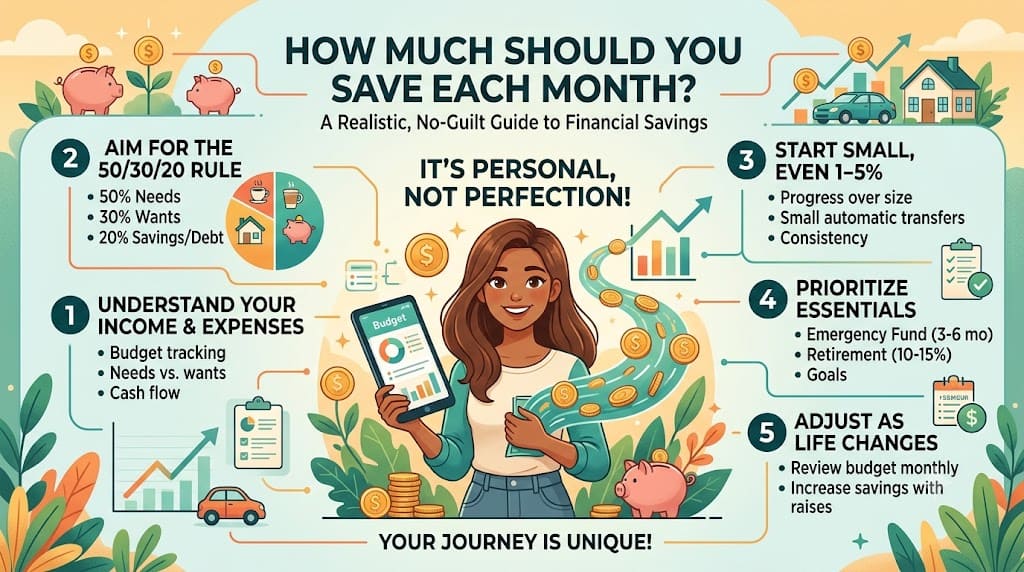
Infographic explaining how much to save each month using the 50/30/20 budgeting rule, emergency fund goals, and practical monthly savings strategies.

How Much Should You Save Each Month? A Realistic, No-Guilt Answer

Most financial planners suggest saving 15% to 20% of your gross income each month, split across an emergency fund, retirement, and specific goals. If that’s out of reach right now, saving 5% to 10% consistently and building up from there works too. What matters more than hitting a specific number is starting, automating it, and

How Much Should You Save Each Month? A Realistic, No-Guilt Answer Read More »

Person creating a monthly savings plan to build an emergency fund on a tight budget.

How to Build an Emergency Fund in 6 Months (Even on a Tight Budget)

Building a real emergency fund in 6 months means picking a target (3-6 months of essential expenses, or a smaller $1,000-$2,000 starter goal if that’s more realistic), automating a fixed transfer to a separate high-yield savings account every payday, and layering in windfalls and one trimmed expense category to close the gap faster. The math

How to Build an Emergency Fund in 6 Months (Even on a Tight Budget) Read More »