
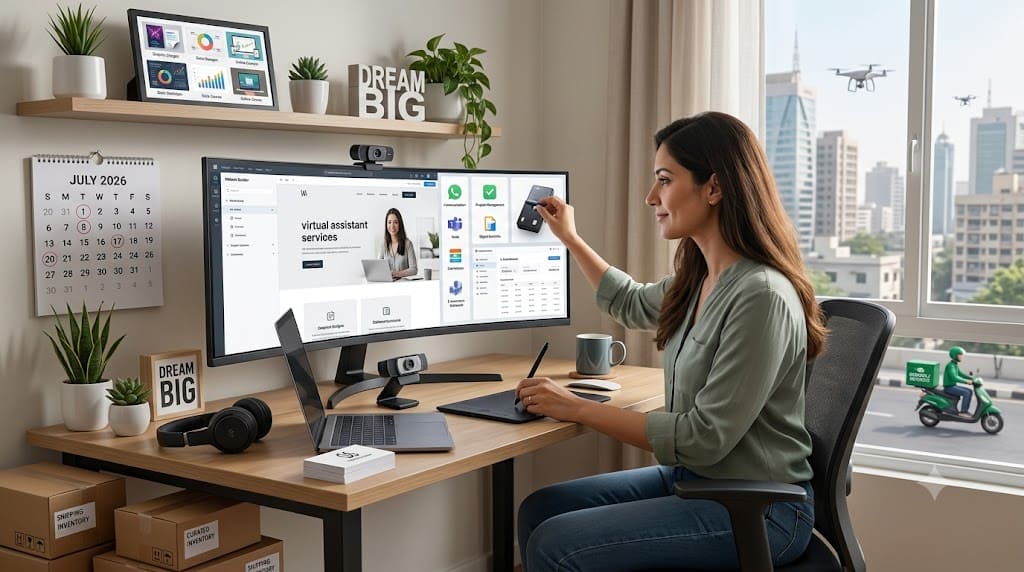
5.7 million new business applications got filed in the US in 2025, a record, according to Census Bureau Business Formation Statistics. Most of those businesses started somewhere between a kitchen table and a spare bedroom, not a rented office.
So the “little investment” part of this question isn’t really the hard part anymore. Free website builders, free design tools, and a phone camera cover most of what used to require real capital. The part people skip, and the part that actually costs them money later, is everything that happens after the idea: what to register, how to keep your business money separate from your grocery money, and what the IRS expects from you once you make your first dollar.
Here’s the direct version: you can start most home-based, service-based, or digital businesses for under $1,000, sometimes under $100. The US Small Business Administration puts the average home-based or microbusiness in the $2,000 to $5,000 range, and that figure includes plenty of businesses that spent almost nothing to get going. What separates the ones that survive from the ones that quietly fold in year one usually isn’t the idea. It’s whether the founder handled the boring parts, budgeting, structure, and taxes, before they needed to.
What “little investment” actually costs, by business type
“Little investment” means wildly different things depending on what you’re starting. Here’s what that actually looks like, with sourced, dated figures instead of a vague range.
| Business type | Typical startup cost | What it covers | Source, as of |
|---|---|---|---|
| Freelance/service business (writing, VA, design, consulting) | Under $1,000 | Laptop you likely already own, a portfolio site, basic software | StartCosts industry data, Feb 2026 |
| Home-based microbusiness (general SBA estimate) | $2,000–$5,000 | Licenses, insurance, initial supplies, client acquisition | U.S. Small Business Administration |
| LLC formation, filing fee only | $40–$500 (state-dependent) | State filing fee for forming an LLC | StartCosts state-by-state data, Feb 2026 |
| First-year startup cost tax deduction | Up to $50,000 immediately deductible | Increased from $5,000 under the One Big Beautiful Bill Act, for tax years beginning after Dec 31, 2024 | Multiple tax-preparation sources, 2026 [NEEDS SOURCE: confirm current figure against IRS.gov before filing] |
That last row matters more than people realize. For years, new businesses could only write off $5,000 of startup costs in year one. Multiple tax outlets are reporting that figure jumped to $50,000 starting with the 2025 tax year, which changes the math on how much you might actually recoup at tax time. I’d confirm the exact number with a tax professional or IRS.gov before you file, since this is a recent change and the details (what counts as a “startup cost” specifically) matter.
Step 1: Validate the idea before you spend a cent
Skip this and you risk spending your $500 on a logo for a business nobody wants. Do it first and most of it costs nothing:
- Post the idea in a relevant Facebook group, subreddit, or Nextdoor and see who actually responds
- Set up a free landing page (Carrd, a free Notion page, even an Instagram bio link) and see if anyone clicks “notify me”
- Ask 10 people who match your target customer whether they’d pay for this, not whether they “like the idea”
Honestly, this step gets skipped more than any other in this list, because it’s the least fun part. But a business that costs $0 to test beats a business that costs $2,000 to find out nobody wanted it.
Step 2: Pick a business model that actually works from a spare room
Not every business idea is realistic to run from home. The ones that are tend to fall into a few buckets:
Service-based work. Freelance writing, bookkeeping, virtual assistance, social media management, tutoring, consulting in whatever you already do for a living. Nothing to manufacture, no inventory to store. This is the fastest path to your first dollar for most people.
Content and digital products. Ebooks, templates, online courses, stock photography, printables. You build it once and sell it repeatedly. It’s slower to get traction than service work, but the ceiling is higher once it does.
Dropshipping and print on demand. You never touch inventory. A supplier ships directly to your customer after they order. Margins run thinner than people expect, so treat the “no money down” pitch with some skepticism until you’ve run the numbers on your specific niche.
Local, in-person services. Pet sitting, house cleaning, tutoring, small-scale event planning. Low startup cost, but capped by how many hours you personally have.
If you want the fuller list, some genuinely low-cost, underused options worth a look: resume writing, freelance editing, AI consulting for small businesses, home organizing, and language tutoring. All of them can realistically launch for under $500.
Step 3: Get the money basics right before your first sale
This is where most “how to start a business” guides stop, and where the real cost of skipping steps shows up later.
Open a separate bank account, even as a sole proprietor. You don’t need an LLC to do this. Mixing personal and business money is the single most common thing that turns a simple tax return into a confusing one, and it’s the first thing an accountant will ask you to fix if you ever get audited.
Decide on a business structure, but don’t overthink it early. The IRS’s checklist for starting a business is worth a skim here, mainly to confirm what registration actually applies to you. Most home businesses start as sole proprietorships by default, no paperwork required. An LLC costs $40 to $500 depending on your state and mainly buys you liability protection, meaning your personal assets stay separate from business debts. If you’re testing an idea with a friend or two before committing real money, sole proprietor is fine. If you’re taking on any risk (client contracts, physical products, anything that could get you sued), the LLC filing fee is cheap insurance.
Budget before you spend, not after. Before you buy anything, run your numbers through FinToku’s Budget Planner & 50/30/20 Calculator to see what you can actually pull from your regular income without wrecking your month. A lot of “no money” business advice quietly assumes you have savings to fall back on. If you don’t, building a small emergency fund first before you dip into cash flow for a new venture isn’t overly cautious. It’s the difference between a business that can survive a slow month and one that can’t.
A cheap expanding file folder is honestly all you need at first to keep receipts and paperwork sorted by month instead of piled in a shoebox. (Quick heads up, that’s an affiliate link, so FinToku may earn a small commission if you buy through it. Full details in our Affiliate Disclosure.)

Step 4: Launch with free or nearly-free tools
You genuinely don’t need to spend money here in 2026:
- Website: a free-tier site builder or even a well-built Instagram/LinkedIn profile to start
- Design: Canva’s free plan covers most small-business graphic needs
- Invoicing and bookkeeping: free tiers exist on most accounting apps for a single user
- Payments: most payment processors charge nothing upfront, just a per-transaction fee
- Marketing: organic social posting and word of mouth, which costs time, not money
Reinvest your first real profits into whichever one of these is actually holding you back, not all of them at once.
Step 5: Know what taxes look like before you owe them
Nobody enjoys this part, but it’s the part that saves or costs you real money, and it’s the part almost no generic “start a business” article covers in any depth.
If your home business earns a profit, you’ll generally owe self-employment tax on top of regular income tax. The IRS sets that rate at 15.3%, covering Social Security and Medicare, since nobody’s withholding it from a paycheck for you anymore. It catches a lot of first-time freelancers off guard around April.
The upside: working from home opens up deductions a W-2 employee never gets. If you use part of your home regularly and exclusively for the business, you may qualify for the home office deduction, and there’s a longer list of tax deductions self-employed workers routinely miss, from a portion of your internet bill to mileage between client visits. If you’re freelancing specifically (as opposed to selling a product), FinToku’s freelancer tax deduction guide walks through the full list.
Once your business starts earning real money, run your estimated numbers through FinToku’s US Business Federal Income Tax Calculator so April doesn’t surprise you. Set aside a rough 25-30% of profit for taxes as you go rather than treating it as a bill that appears once a year.
Step 6: Fund growth once you have real revenue
Once the business is generating income and you want to grow past what you can bootstrap, a few options open up that weren’t available on day one:
- Small business loans, once you have a few months of revenue history to show a lender. FinToku’s guide to small business loans covers how qualification actually works.
- Business credit cards, useful for short-term cash flow once you’ve separated business spending
- Reinvesting profit, still the most common way home businesses actually grow, according to the founders in nearly every case study I’ve read
Resist the urge to take on debt in month one. Most home businesses don’t need outside funding until they’ve already proven the idea works with their own money.
Common mistakes people make starting from home
A few patterns show up again and again:
Buying tools before making a sale. The fanciest logo and a paid website template don’t matter if nobody’s bought anything yet. Validate first, spend second.
Never separating business and personal money. Even $0 in startup costs doesn’t excuse skipping a dedicated bank account. It’s free to open one and it saves hours at tax time.
Underpricing to “get started.” Home-based service businesses especially tend to price too low out of nervousness, then struggle to raise rates later with existing clients. Price for where you want to be in a year, not where you are today.
Ignoring taxes until the deadline. Set aside money as you earn it. Scrambling in April to find 25% of your revenue is a much worse conversation than setting it aside monthly.
Key Takeaways
- Most home-based service or digital businesses can realistically launch for under $1,000; the SBA’s general home-based/microbusiness estimate is $2,000 to $5,000.
- Validating an idea for free, before spending anything on tools or branding, is the single step most likely to save you money.
- You don’t need an LLC to start. A separate bank account matters more on day one than your business structure does.
- Self-employment tax runs around 15.3% on profit, but home-based businesses also unlock deductions (home office, a portion of utilities, mileage) that a traditional job never offers.
- Most home businesses grow through reinvested profit, not outside funding, in their first year.
Frequently Asked Questions
What is the cheapest business to start from home with no money? Service-based businesses that use skills you already have, like freelance writing, virtual assistance, tutoring, or social media management, are typically the cheapest to start since they need little more than a laptop and internet connection you likely already have.
What’s the most successful home-based business right now? There’s no single “most successful” business; it depends heavily on your existing skills and local demand. Service-based work (consulting, virtual assistance, freelance skills) tends to have the fastest path to first revenue, while digital products and content businesses take longer to build but can scale further once they do.
Do I need to register an LLC before I start working from home? No. Most home businesses start as sole proprietorships automatically, with no paperwork required. An LLC (typically $40-$500 to file, depending on your state) mainly adds liability protection, which becomes more important once you’re taking on client risk or handling other people’s money.
What are some unique, low-investment business ideas I can start from home? Beyond the usual freelancing and dropshipping suggestions, consider resume writing, AI consulting for small businesses, home organizing services, printable/digital product design, or niche online tutoring. All can typically launch for under $500.
How much does it actually cost to start a home-based business? It varies widely by business type. Freelance and service businesses often launch for under $1,000. The SBA’s general estimate for a home-based microbusiness runs $2,000 to $5,000, covering licenses, basic supplies, and initial marketing.
If you’re weighing whether to start now or wait until you’ve saved more, run your numbers through FinToku’s Budget Planner first. Seeing the real gap between what you have and what you’d need is usually more useful than guessing.
Read More
- Small Business Loans: How They Work and How to Qualify
- Tax Deductions for Self-Employed Workers (2026 List)
- How to Build an Emergency Fund in 6 Months (Even on a Tight Budget)
Disclaimer
This article is for general informational purposes only and shouldn’t be taken as financial, tax, or legal advice. The startup cost figures and the Section 195 deduction amount above are examples pulled from current reporting, not guarantees for your specific situation, and tax rules around business deductions change often. Before registering a business structure or filing a return, it’s worth checking with a qualified accountant or tax professional who can look at your specific numbers. You can also read FinToku’s full Financial Disclaimer.
Published by Saad Faisal for FinToku (fintoku.com) · Published July 25, 2026 · Updated July 25, 2026 FinToku provides free finance tools and guides to help you make smarter money decisions.