
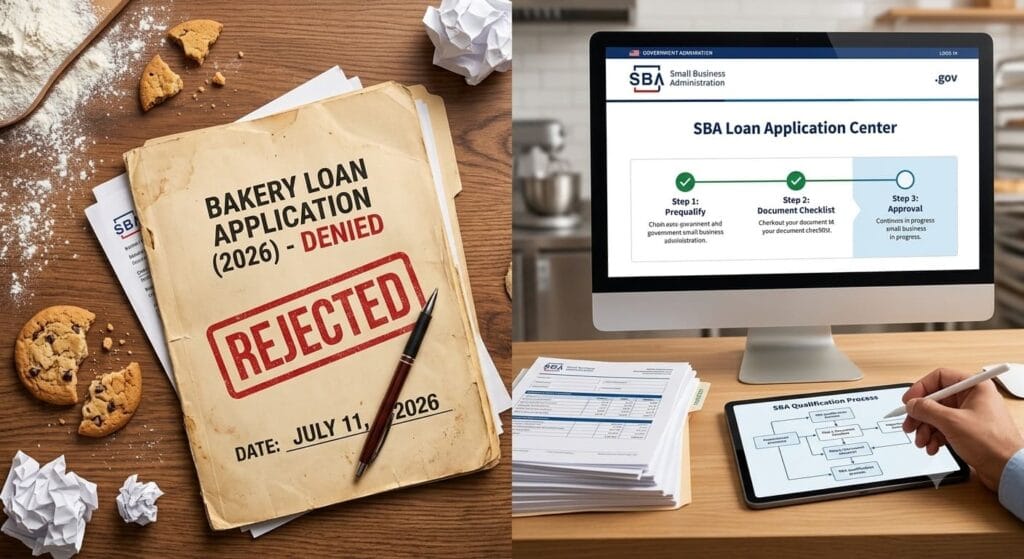
A friend of mine spent three weeks putting together a loan application for her bakery. She got rejected anyway. She’d applied for an SBA loan, but what she actually needed was a short-term line of credit to cover a slow winter. Nobody had explained the difference to her. She’d just heard “SBA loan” was the gold standard and assumed that was the move.
That mix-up costs small business owners a lot of wasted time. A small business loan is money a lender gives your business, which you repay with interest over an agreed period. The right type depends far more on what you need the money for than on which one sounds the most official.
The main types of small business loans
Before you fill out any application, it helps to know what’s actually out there. Each type is built for a different kind of need. Picking the wrong one is the single most common reason lenders deny applications or the loan ends up costing more than expected.
SBA loans carry a government guarantee: the U.S. Small Business Administration backs a portion of the loan, which lowers the risk for the bank issuing it. That guarantee is why these loans tend to carry lower interest rates and longer repayment terms than almost anything else on this list. The tradeoff is speed. Expect real paperwork, and a few weeks to a few months before you see funds.
Term loans are a lump sum you pay back on a fixed schedule, with interest. Short-term versions run three to 24 months. Longer ones can stretch past 10 years. These are the go-to for a specific, one-time cost: buying out a partner, renovating a location, refinancing older debt.
Business lines of credit work more like a credit card than a loan. The lender approves you for a credit limit, say $50,000, and you only pay interest on what you actually draw. This is the tool for smoothing out cash flow, not for funding a big one-time purchase.
Equipment financing uses the equipment itself as collateral. That’s why it’s often easier to qualify for than an unsecured loan, even with a thinner credit file. You’re borrowing against the specific truck, oven, or machine you’re buying.
Microloans cap out around $50,000. The SBA designed this program specifically for newer or underserved businesses that can’t yet show the track record a bank wants to see, including startup founders, people with limited credit history, and business owners in low-income communities.
A note on grants
Quick side note: if you haven’t looked into small business grants yet, it’s worth doing before you take on any debt at all. Grants don’t get repaid. They’re also competitive and slower to land than most of the loan types above, so most owners end up using them alongside a loan rather than instead of one.
How the main loan types compare
Here’s how those five stack up on the two things owners usually ask about first:
| Loan type | Typical credit score minimum | Typical funding speed |
|---|---|---|
| SBA loans | ~650 | 14-90 days |
| Term loans | ~570 | Same day-30 days |
| Business lines of credit | ~600 | Same day-30 days |
| Equipment financing | ~550 | Same day-30 days |
| Microloans | No fixed minimum | 7-30 days |
As of July 2026, based on lender criteria compiled by NerdWallet’s business loans research. Individual lenders set their own thresholds, so treat these as a general range, not a guarantee.
What’s changed in 2026
One thing has shifted recently. Starting July 4, 2026, qualified borrowers can combine an SBA 7(a) loan and a 504 loan for up to $10 million total. That’s double the previous combined cap.
It sounds like a big deal, but most small businesses won’t feel it. The average SBA 7(a) loan actually comes in at just over $380,000, and fewer than 7% of borrowers get more than $2 million. This change mostly matters if you’re in an equipment-heavy industry like manufacturing, or you’re buying commercial real estate.
What lenders actually look at
Every lender, whether it’s a bank, an SBA-approved lender, or an online platform, is trying to answer one question: will this business pay me back? A handful of factors show up on nearly every application.
Cash flow comes first. You’ll need to show a steady stream of revenue and a track record of managing your finances. Expect to hand over bank statements, income statements, and tax returns for both you and the business.
Credit history matters twice over, since lenders check your personal score alongside the business’s own credit file. Banks tend to want scores in the high 600s or 700s. Online lenders will often work with the low-to-mid 600s.
Time in business and collateral round it out. Banks typically look for two years of operating history as their benchmark, though online lenders will sometimes fund a business that’s only six months old. Collateral, whether that’s equipment, real estate, or a personal guarantee, gives the lender something to fall back on if things go sideways.
The Five Cs of Credit
Bankers sometimes describe all of this using a framework called the Five Cs of Credit: character, capacity, capital, collateral, and conditions. It’s a useful mental checklist, even if nobody at the bank ever says the phrase out loud to you.
Does business structure matter?
Your business structure, whether you’re an LLC, sole proprietorship, partnership, or corporation, doesn’t lock you out of any particular loan type. Most lenders, including the SBA, work with any of them as long as you’re operating as a legitimate for-profit business.
What changes by entity type is mostly paperwork. An LLC or corporation typically needs to show formation documents and an EIN. A sole proprietorship can often lean on the owner’s personal credit and Social Security number instead.
How to actually apply
Figure out what you need the money for first. A one-time equipment purchase points toward a term loan or equipment financing. Ongoing seasonal gaps point toward a line of credit. Forcing the wrong tool onto the job is exactly what happened with my friend’s bakery.
Check your eligibility before you apply, not after. Pull your credit report and know your business’s annual revenue. Then be honest with yourself about whether you’re closer to the SBA’s stricter bar or an online lender’s more flexible one.
Write an actual business plan, even a short one. Lenders want to see how you’ll use the funds and, more importantly, how you’ll pay them back. Lenders reject a vague plan faster than almost anything else, and it’s a fixable problem before you ever submit anything.
Compare more than the interest rate. Origination fees, prepayment penalties, and the repayment schedule (daily, weekly, or monthly) all change the real cost of a loan. A slightly higher rate with no prepayment penalty can end up cheaper than a lower rate buried in fine print.
Submit and follow up. Basic paperwork, business registration, financial statements, and a P&L, is standard across almost every lender. If a lender denies you, ask why. It’s usually fixable: pay down existing debt, correct a credit report error, or wait a couple more months to build up time in business.
Once you’ve got a loan, running the numbers through FinToku’s US Business Federal Income Tax Calculator can help you see what you’ll actually be able to put toward paying it down each year.
Key Takeaways
- A small business loan is money you borrow and repay with interest, and the right type (SBA, term loan, line of credit, equipment financing, or microloan) depends on what you’re using it for, not which one sounds most prestigious.
- SBA loans offer the lowest rates and longest terms but take the longest to fund, typically 14 to 90 days.
- Lenders mainly evaluate cash flow, credit score, time in business, and collateral, sometimes summarized as the Five Cs of Credit, and a vague business plan is one of the most common (and most fixable) reasons applications get denied.
- Bad credit, no revenue yet, and your business’s entity type all narrow your options rather than ruling you out entirely, and small business grants are worth researching alongside, not instead of, a loan.
- Starting July 4, 2026, SBA borrowers can combine a 7(a) and 504 loan for up to $10 million total, though most small businesses won’t need anywhere near that.
Frequently Asked Questions
How do small business loans work? You borrow a set amount from a lender and repay it, plus interest, over an agreed schedule. The maximum amount, rate, and term depend on the loan type, the lender, and your business’s financial profile.
Can I get a small business loan with bad credit? Yes, though your options narrow and get more expensive. Some online lenders and equipment financing companies will approve personal credit scores as low as the mid-500s, since they either price the loan higher to offset the risk or back it with collateral. Banks and SBA lenders are much less flexible here.
Can I get a startup business loan with no revenue? It’s the toughest scenario to fund, since lenders have no track record to check. A few paths still work. The SBA built its microloan program for exactly this situation. Some online lenders will fund a business with as little as three to six months of operating history. A personal loan or business credit card can also bridge the gap until you have real revenue to show.
Does my business type, like an LLC, affect my loan eligibility? Not really, in terms of which loan types you can apply for. Most lenders work with LLCs, sole proprietorships, partnerships, and corporations equally. What changes is the paperwork. An LLC typically needs formation documents and an EIN, while a sole proprietorship can often apply using the owner’s personal credit and Social Security number instead.
Are there small business loans specifically for women-owned businesses? Yes. Several nonprofit and mission-driven lenders focus specifically on women-owned and minority-owned businesses. They often come with more flexible credit and revenue requirements than a traditional bank, plus coaching and support resources. They’re worth checking before a general online lender if you qualify.
If you’re still weighing your options, it’s worth bookmarking this page and coming back to it once you’ve narrowed down which loan type actually fits your situation.
Every business’s numbers look different, and this article isn’t a substitute for advice tailored to your specific situation. The loan amounts and timelines above are general examples, not guarantees from any lender. Before signing anything, it’s worth talking to a qualified financial advisor or accountant who can look at your actual numbers. You can also read FinToku’s full Financial Disclaimer.
By Saad Faisal · Published July 12, 2026
Published by Saad Faisal for FinToku (fintoku.com) FinToku publishes free, no-signup finance calculators and practical money guidance.