
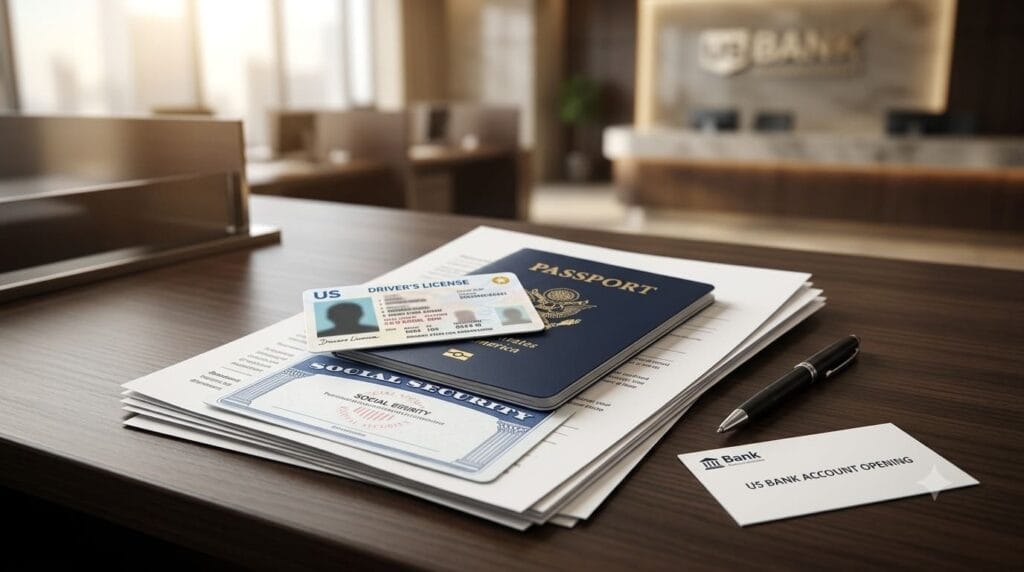
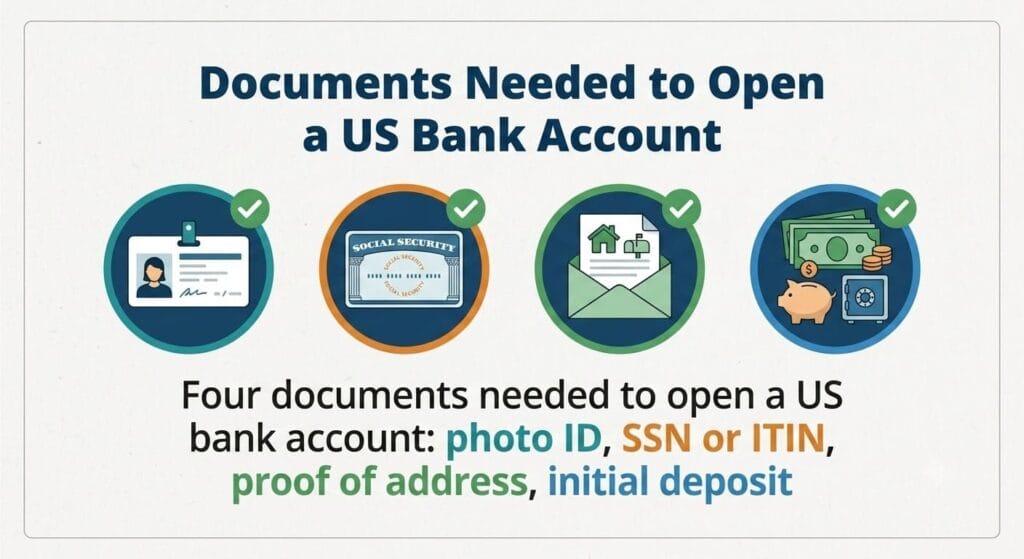
Most US banks ask for the same core stack of documents: one government-issued photo ID, a second identifier (your Social Security number, or an ITIN if you don’t have one), and proof of your US address, such as a utility bill or lease. Some banks also want a small opening deposit, though plenty now waive it. If you’re a citizen with a driver’s license and a recent bill in your name, you can usually open an account the same day, in person or online.
Why Banks Ask for All This in the First Place
Every US bank is legally required to verify a new customer’s identity before opening an account, under a rule called the Customer Identification Program (CIP), which comes from Section 326 of the USA PATRIOT Act. In plain terms, the bank must collect your name, address, date of birth, and an identification number, then verify all of it before you can move money through the account. This isn’t a random hoop the branch invented.
That’s why a bank can’t just take your word for who you are, no matter how long you’ve been a customer somewhere else. The paperwork feels tedious, but it’s the same rule every bank in the country follows, so once you know the four categories, you can walk into any branch prepared.
What Documents Do You Need to Open a Bank Account?
1. A Government-Issued Photo ID
You’ll need one primary form of identification, current and unexpired, with your photo on it. Banks generally accept:
- A US driver’s license or state ID card
- A valid passport
- A US military ID
- A permanent resident card (green card)
I’ve noticed banks are stricter about this than people expect. An expired license, even by a few weeks, gets rejected more often than not, so it’s worth checking the date before you leave the house.
2. Your Social Security Number, or an ITIN
Banks ask for a taxpayer identification number so they can report any interest your account earns to the IRS. For most US citizens and green card holders, that’s your Social Security number (SSN).
If you’re not eligible for an SSN, an Individual Taxpayer Identification Number (ITIN) works as a substitute at most major banks. You can apply for an ITIN through the IRS before you ever walk into a branch, which saves a return trip. Some banks will even open the account while your ITIN application is pending, as long as you can show you’ve already filed for one.
3. Proof of Your US Address
This is where a lot of people get stuck, especially if they just moved. Banks want a document, separate from your ID, that shows your name and current US address. Accepted documents usually include:
- A utility bill dated within the last 60 days
- A signed lease or mortgage statement
- A bank or credit card statement from another financial institution
If you’re staying with family or in a dorm and don’t have a bill in your own name yet, ask the bank directly. Some will accept a letter from your school or landlord confirming your address instead.
4. Money for an Opening Deposit (Sometimes)
Some banks want a small deposit to activate the account, typically somewhere between $25 and $100, and it can usually be covered by cash, a check, or a transfer from another account. Plenty of online banks and a growing number of traditional ones have dropped this requirement entirely, so it’s genuinely worth asking before you assume you need cash on hand.
What You Need, by Situation
The core four documents cover most people, but a few situations add extra steps. Here’s how the requirements actually shift, based on who’s applying (accurate as of July 2026; individual banks can be stricter than the federal minimum).
| Applicant type | Government ID | Tax ID number | Proof of address | Extra requirement |
|---|---|---|---|---|
| US citizen / permanent resident | 1 (driver’s license or passport) | SSN | Utility bill, lease, or statement | Usually none |
| Non-citizen without an SSN | 1-2 (passport plus a secondary ID) | ITIN, or Form W-8BEN in some cases | Utility bill or lease | Often requires an in-branch visit |
| International student (F-1/J-1) | Passport | ITIN or SSN denial letter | Lease, dorm letter, or school enrollment letter | Valid I-20 or DS-2019 and visa stamp |
| Minor under 18 (varies by state) | Minor’s SSN and birth certificate | Parent’s SSN | Parent’s address documents | Parent or guardian must co-sign in person |
| Joint account holders | 1 ID per applicant | Each person’s SSN or ITIN | Address docs for both, or one shared address | Both applicants typically present for account opening |
A Social Security number is not a legal requirement to open a bank account, which surprises a lot of people. Per the Consumer Financial Protection Bureau, banks can accept other identification numbers, including an ITIN, a passport number with country of issuance, or another government-issued ID number. Some banks will also accept a completed IRS Form W-8BEN from non-resident applicants in place of a tax ID.
Opening a Bank Account Without an SSN
I used to assume you were flatly stuck without a Social Security number, but that’s a myth. The Consumer Financial Protection Bureau is explicit that banks can, and many do, open accounts using an ITIN instead of an SSN. You’ll usually still need to visit a branch in person rather than apply online, and you should expect the bank to ask a couple more questions during verification, but it’s a normal, well-established path, not a workaround.
Opening a Bank Account as an International Student
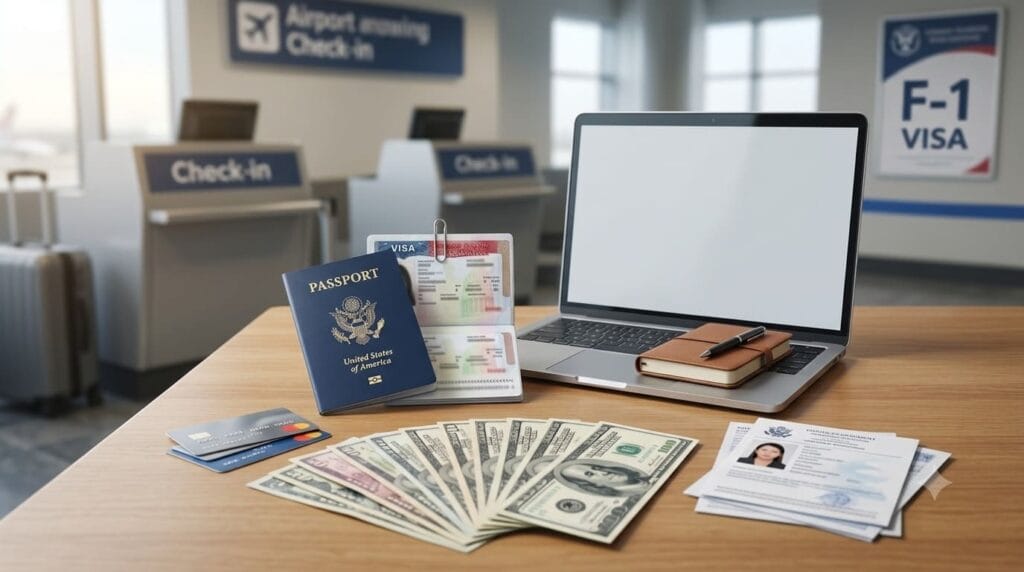
International students on F-1 or J-1 visas can open a US bank account without a parent present once they’re 18, and generally without a Social Security number. The document list looks a little different from the standard four, though, and this is the part most guides skip entirely, which is odd given how many people search for exactly this:
- Valid passport with your visa stamp
- Your I-20 (F-1) or DS-2019 (J-1) form
- Proof of enrollment, like an acceptance letter or student ID
- Proof of a US address, which can be a lease, a dorm assignment letter, or a letter from your school’s international office
- An SSN if you have one from on-campus work, or an ITIN or denial letter if you don’t
If you’re arriving with foreign currency and need to convert it before making an opening deposit, running the numbers through FinToku’s Currency Converter first can save you from an unpleasant surprise at the branch counter.
Common Reasons Applications Get Rejected
A few mistakes show up again and again, and almost all of them are avoidable:
- Bringing a photocopy or a screenshot of an ID. Most banks won’t accept anything but the original document in hand.
- An expired ID, even by a small margin. Check the date before your appointment, not after.
- An address document that doesn’t match your ID name exactly. A nickname on a utility bill versus a legal name on your passport can hold things up.
- Assuming online applications skip the identity check. They don’t. You’ll still upload the same documents, just digitally instead of handing them over a counter.
Key Takeaways
- Most US banks require a government-issued photo ID, an SSN or ITIN, and proof of your US address to open an account.
- A Social Security number is not legally required. Non-citizens can open accounts with an ITIN, and in some cases a passport plus IRS Form W-8BEN.
- International students on F-1 or J-1 visas typically need a passport, I-20 or DS-2019, and proof of enrollment, and generally don’t need a parent present if they’re 18 or older.
- Opening deposits, when required, usually range from $25 to $100, though many banks now waive this entirely.
- Federal law (the USA PATRIOT Act’s Customer Identification Program rule) is why every bank asks for the same core information, regardless of size or location.
Frequently Asked Questions
Can I open a bank account without a Social Security number?
Yes. Many banks accept an Individual Taxpayer Identification Number (ITIN) instead, and some allow a passport plus a completed IRS Form W-8BEN for non-resident applicants.
Can international students open a US bank account?
Yes, and generally without a parent present once they’re 18. You’ll typically need a passport, your I-20 or DS-2019, and proof of school enrollment, along with an SSN or ITIN if you have one.
What documents do I need for a joint bank account?
Each person on the account usually needs their own government-issued ID and SSN or ITIN. Some banks also want contact information, like a phone number or email, for every applicant listed.
How much money do you need to open a bank account?
It depends on the bank. Some require an opening deposit between $25 and $100, while many online banks and a growing number of traditional ones require nothing at all.
Can you open a bank account with just a passport?
A passport alone is often accepted as your primary photo ID, but most banks will still ask for a second document, like proof of address or a taxpayer ID number, before approving the account.
If you’re comparing where to actually put your first US paycheck once the account is open, FinToku’s FD Calculator is worth a look for anyone weighing a certificate of deposit against a plain savings account.
Disclaimer
This article is for general informational purposes only and shouldn’t be taken as financial or legal advice. Document requirements, deposit minimums, and ITIN rules can vary by bank and change over time, so the specifics above are a starting point, not a guarantee of what any single institution will ask for. Before opening an account, it’s worth confirming current requirements directly with your chosen bank or credit union, or consulting a qualified professional for anything involving your immigration or tax status. You can also read FinToku’s full Financial Disclaimer.
Read More
- Checklist for Opening a Bank or Credit Union Account, from the Consumer Financial Protection Bureau
- 2023 FDIC National Survey of Unbanked and Underbanked Households, from the Federal Deposit Insurance Corporation
- Customer Identification Program requirements, 31 CFR § 1020.220, via Cornell’s Legal Information Institute
Published by Saad Faisal for FinToku (fintoku.com) FinToku publishes free, no-signup finance calculators and practical money guidance.
By Saad Faisal · Published July 13, 2026 · Updated July 13, 2026