
Yes. You can have two checking accounts, five checking accounts, or one at every bank branch you pass on your way to work. There’s no federal law capping how many you can open. No bank card flags you for having “too many.” The only real limits are the ones each bank sets for itself, and the ones you set for your own sanity.
A reader wrote in a few weeks ago asking almost exactly this. A different bank had offered her a $300 bonus for opening a new checking account, but she already liked the one she had. Was she allowed to just… have both? She was. She did. She’s now $300 richer and mildly more annoyed by having two banking apps on her phone.
What Counts as “Multiple” Checking Accounts?
A second (or third, or fourth) checking account is simply another deposit account. You can open it at your current bank or a different one. It gets its own account number, its own balance, and its own debit card if you want one. It doesn’t merge with your existing account automatically. You choose how much (if any) money moves between them, and you can close any of them later without touching the others.
Can You Have Two Checking Accounts at the Same Bank?
Generally, yes. Most major banks and credit unions let you open a second checking account under your name at the same institution. It’ll usually show up right alongside your first one in the same mobile app and online banking login.
This is common enough that it has obvious use cases. Some people want an individual account plus a joint account with a partner. Others want a personal account plus a small business account, or a parent needs to open a kids’ account linked to their own. Chase, for one, confirms on its own education page that there’s no hard cap on how many checking accounts a customer can hold. Some banks do limit how many of the same account type you can open at once, though. If you’re wondering about Bank of America, Wells Fargo, or another big national bank specifically, the general rule holds. Exact limits and requirements still vary by bank and sometimes by account type. It’s worth a quick call or chat with your bank before assuming anything.
Can You Open Checking Accounts at Different Banks?
Also yes, and there’s no rule against spreading your money across two, three, or more institutions. People usually do this for one of two reasons. Some are chasing a better sign-up bonus or lower fees somewhere else. Others want an extra layer of FDIC insurance protection. Standard FDIC coverage tops out at $250,000 per depositor, per bank, per ownership category. If you’re sitting on more than that in one place, a second bank genuinely spreads the risk.
The tradeoff is more logins to track and, if you’re not careful, more chances to miss a fee.
Why People Actually Open a Second Checking Account
The reasons tend to cluster around a handful of real situations, not abstract “financial organization” advice:
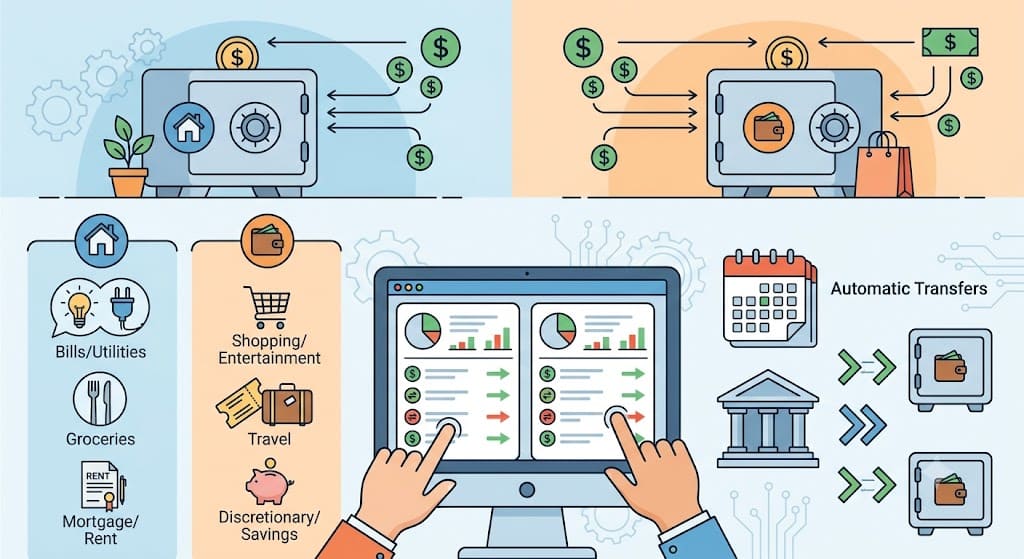
Bills, on autopilot. One account exists purely to hold rent, utilities, and subscriptions. You fund it on payday so autopay never has a bad month.
Side income. Freelance or gig income lands in its own account. That makes tax season dramatically easier, since you’re not untangling client payments from your grocery runs.
Shared expenses. A joint account covers rent or groceries with a partner, while each person keeps an individual account for personal spending. Nobody has to explain a coffee habit to anyone.
A buffer against fraud. Keeping day-to-day debit card swipes in one account and larger transfers in another limits what’s exposed if someone skims your card number.
I ran my own version of this through FinToku’s Budget Planner & 50/30/20 Calculator. I split my paycheck between a bills account and a spending account, and honestly, seeing the split as actual numbers instead of a vague plan is what made it stick.
The Real Numbers Behind This Decision
Here’s what the data actually says, as of when this was written:
| Metric | Figure | As of |
|---|---|---|
| Americans with 2+ checking or savings accounts | 51% | SoFi April 2024 Banking Survey |
| FDIC deposit insurance limit per depositor, per bank | $250,000 | Current standard limit (FDIC) |
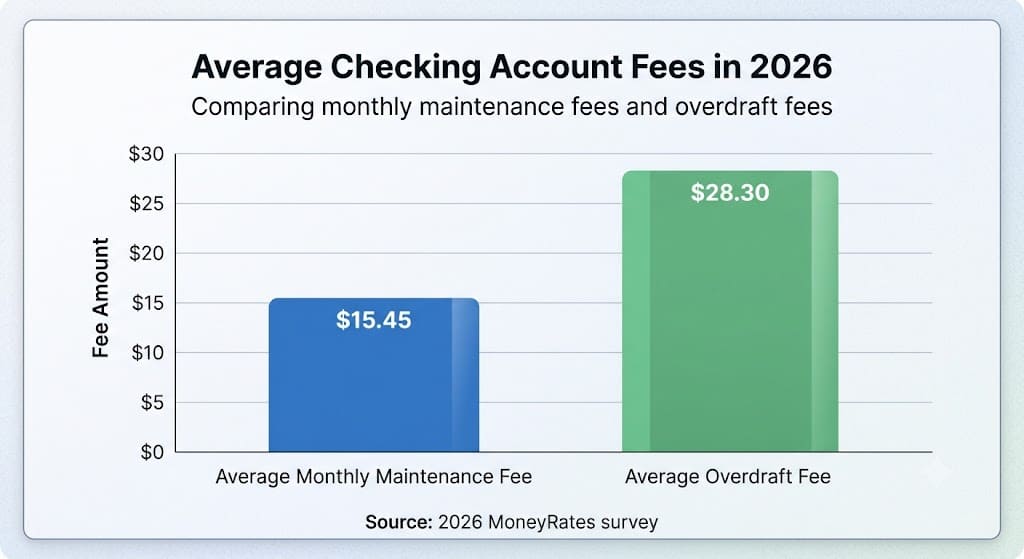
| Average monthly checking maintenance fee | $13.51 | 2026 MoneyRates Checking Account Fee Survey |
| Average overdraft fee | $32.75 | 2026 MoneyRates Checking Account Fee Survey |
| Cash transaction that triggers a bank’s federal reporting requirement | $10,000+ | Bank Secrecy Act (in effect since 1970) |
Pros and Cons of Having Two Checking Accounts
| Details | |
|---|---|
| Pro: cleaner budgeting | Money is pre-sorted by purpose, so you’re not mentally subtracting “the rent money” from your balance every time you check it |
| Pro: fewer missed autopayments | A dedicated bills account means a big grocery trip can’t accidentally starve your rent payment |
| Pro: more FDIC coverage room | Splitting large balances across banks keeps more of your money inside the $250,000 insured zone |
| Con: more to track | Two logins, two debit cards, two sets of alerts, two chances to lose track of a balance |
| Con: fee exposure doubles | If either account carries a monthly fee or minimum balance requirement, you’re now managing two of them instead of one |
| Con: overdraft risk if money is spread thin | Splitting funds unevenly can leave one account short right when a payment hits |
Honestly, I think most people overcomplicate this decision. Two accounts with a clear, single purpose each beats five accounts with no plan behind them.
Does Having Multiple Checking Accounts Hurt Your Credit Score?
No, at least not directly. The three major credit bureaus (Equifax, Experian, TransUnion) don’t track checking accounts the way they track credit cards or loans. Opening one, or five, doesn’t show up on your credit report. It doesn’t move your credit score either.
Banks do check a separate consumer reporting agency called ChexSystems. It tracks things like unpaid overdraft balances or accounts a bank closed for suspicious activity. A bad ChexSystems history can make it harder to open a new account somewhere. That’s a different system from your credit score entirely, and it tracks how you managed a bank account, not how many you have.
What Is the $10,000 Bank Rule?
This one shows up a lot in searches related to multiple bank accounts, but it’s actually unrelated to how many checking accounts you can have. Under the Bank Secrecy Act, banks must file a Currency Transaction Report any time you deposit, withdraw, or move $10,000 or more in physical cash in a single business day. It’s a decades-old anti-money-laundering rule. It’s not a limit on your deposits, and opening a second checking account doesn’t trigger it.
It’s worth mentioning here mainly because people constantly mix up the two topics online. Opening multiple accounts is completely unrelated to this cash-reporting threshold.
Common Mistakes When Managing Two (or More) Checking Accounts
The accounts themselves rarely cause problems. Losing track of them does. A few habits keep that from happening:
- Turn on low-balance alerts for every account, not just your main one
- Automate the transfers between accounts instead of moving money manually each month
- Check every account at least weekly, even the one you “don’t really use”
- Know each account’s minimum balance requirement before you forget it exists
FinToku’s 40+ Common Banking Terms glossary is a decent place to double check what ACH, NSF, or “ownership category” actually mean if any of this is new vocabulary.
Key Takeaways
- There’s no federal legal limit on how many checking accounts you can have, whether at one bank or spread across several.
- Most major banks allow individual customers to open more than one checking account at the same institution, though exact rules vary by bank.
- Credit bureaus don’t track checking accounts, so having multiple accounts doesn’t affect your credit score.
- The $10,000 bank rule is a separate cash-reporting law and has nothing to do with how many accounts a bank lets you open.
- Splitting money across two accounts works best when each account has one clear job, bills, spending, or savings, rather than no plan at all.
Frequently Asked Questions
Is it a good idea to have two checking accounts?
For a lot of people, yes. If you’re using the second account for a specific purpose, like isolating bill money or separating business income, it tends to reduce overdrafts and confusion. If you’re opening one just because, without a plan for what it’s for, it’s more likely to become one more login you forget to check.
Does having multiple checking accounts hurt your credit score?
No. Credit bureaus don’t track checking accounts. Opening or holding several of them has no direct effect on your credit score.
What is the $10,000 bank rule?
It’s a federal requirement, unrelated to account count. Banks must report any cash deposit or withdrawal of $10,000 or more to the government under the Bank Secrecy Act. It doesn’t limit how much you can deposit or how many accounts you can hold.
Is it illegal to have two checking accounts?
No. There’s no law limiting how many checking accounts a person can have, at one bank or across several. The only restrictions that exist are internal policies individual banks may set for their own customers.
Can you have two checking accounts at the same bank, like Chase or Bank of America?
At most large banks, yes. Chase, for example, states directly that there’s no set limit on how many bank accounts a customer can hold. Opening the same account type too many times at once can trigger extra scrutiny, though. Other big banks generally follow the same logic. Specific rules, fees, and account limits still vary by institution, so it’s worth confirming directly with your bank before opening a second one.
If you’re setting up a second account and want to see how a specific paycheck split would actually play out, FinToku’s Paycheck Calculator is a quick way to run the numbers before you set up new direct deposit instructions.
Read More
- Documents Needed to Open a Bank Account in the US
- Bank Account in the USA: What to Know Before You Open One
- 40+ Common Banking Terms in the U.S. Everyone Should Know (2026 Glossary)
Disclaimer
This article is for general informational purposes only. It isn’t financial or legal advice. Bank-specific policies, like exactly how many checking accounts a given institution allows, can change and vary by account type. Confirm directly with your bank before opening a new one. You can read FinToku’s full Financial Disclaimer for more.
Published by Saad Faisal for FinToku (fintoku.com) · Published July 19, 2026 · Updated July 19, 2026 FinToku provides free finance tools and guides to help you make smarter money decisions.